

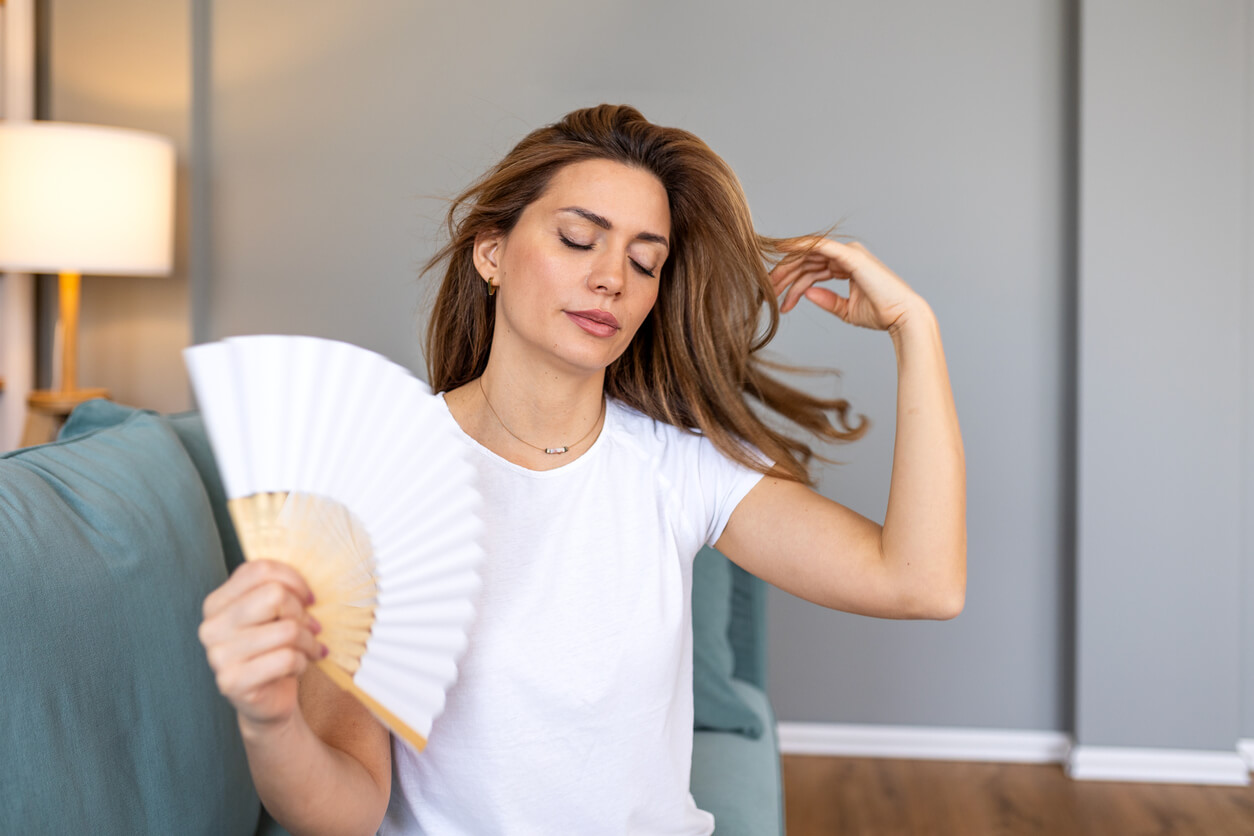
Night sweats can significantly disrupt sleep, but optimizing your bedroom, avoiding triggers, and managing stress can help you find relief and treatment for hot flashes.
In short,
- Optimize the Sleep Environment: Keep the bedroom cool (60–67°F), use fans, and choose breathable, moisture-wicking bedding and sleepwear.
- Avoid Evening Triggers & Stress: Cut back on late-day alcohol, caffeine, and spicy foods, and practice deep breathing or a relaxing wind-down routine before bed.
- Track Symptoms & Consult a Doctor: Keep a symptom journal to identify triggers, and seek medical care if night sweats persist or occur with red-flag symptoms like fever or weight loss.
Understanding Your Night Sweats and Hot Flashes
Night sweats disrupt your sleep and leave you feeling exhausted the next day. Finding relief starts with identifying your personal triggers. Making small changes to your daily routine can help you get the restful sleep and treatment for hot flashes you need.
What Causes Night Sweats
According to the Mayo Clinic, night sweats are episodes of excessive, heavy sweating that happen while you are asleep. Unlike normal perspiration from a warm room, these episodes are often intense enough to completely soak through your pajamas and bedsheets. They can wake you up feeling cold and clammy, making it difficult to get back to sleep.
For many women, the primary culprit behind these disruptive episodes is the hormonal fluctuation associated with perimenopause and menopause.
As estrogen levels decline, the part of the brain that regulates body temperature becomes highly sensitive to even slight changes in warmth. This sensitivity triggers an inappropriate cooling response, leading to sudden sweating.
While hormones are a common cause, other factors can also disrupt your body’s thermostat, including:
- High daily stress and anxiety
- Certain medical conditions
- Common medications, such as antidepressants, hormone therapies, and some over-the-counter pain relievers
Lifestyle Adjustments for the Treatment of Hot Flashes
Keeping a daily symptom log is one of the most effective ways to uncover the patterns behind your night sweats. By tracking when your symptoms occur and what you were doing beforehand, you can identify your personal triggers.
To get started, try tracking these key details each day:
- The time you woke up sweating.
- What you ate or drank in the evening.
- The temperature setting in your bedroom.
- The type of pajamas and bedding you used.
- Your general stress level during the day.
This information helps you make targeted adjustments to your daily routine. It also gives your doctor clear data to help find the best treatment for hot flashes.
Optimizing Your Bedroom Environment
Your sleep environment dictates how well your body regulates nighttime temperature. Keeping the space cool prevents overheating.
Lowering the Room Temperature
Experts recommend a bedroom temperature between 60 and 67 degrees Fahrenheit. A cool environment drops core body temperature, signaling rest.
- Set your thermostat lower before bed.
- Use a fan to circulate air.
- Keep window blinds closed during the day.
According to the Cleveland Clinic, drinking a sip of cold water before bed also helps regulate your body temperature. This quick step is especially helpful as a treatment for hot flashes if your room feels warm or you already feel overheated.
Choosing Cooling Bedding and Mattresses
Standard memory foam mattresses are highly dense and often trap your natural body heat throughout the night, which can disrupt your sleep cycle. To prevent this buildup of warmth, you can swap out heavy, synthetic bedding for lighter, more breathable alternatives.
Making these simple adjustments to your sleep surface and covers helps your body shed excess heat and maintain a comfortable temperature.
- Use breathable cotton, bamboo, or linen sheets.
- Avoid heat-trapping synthetic polyester.
- Use cooling mattress toppers and pillows.
- Layer blankets for easy removal.
Adjusting Your Evening Habits for Treatment for Hot Flashes
The choices you make in the hours leading up to bedtime have a direct, measurable impact on your body’s core temperature throughout the night. Activities that raise your heart rate or stimulate digestion can keep your internal thermostat elevated when it should be naturally cooling down for rest.
Establishing mindful evening habits helps signal to your brain that it is time to wind down and release trapped heat.
Wearing Moisture-Wicking Sleepwear
Select loose-fitting pajamas made from natural, breathable fabrics like lightweight cotton or bamboo. These materials naturally draw moisture away from your skin and allow air to circulate freely around your body.
- Layer sleepwear to easily remove pieces
- Allow air circulation with loose clothing.
- Avoid tight elastic bands.
- Keep a spare dry pair of pajamas nearby.
Additionally, avoiding tight synthetic fabrics can help prevent heat from becoming trapped against your skin overnight.
Avoiding Evening Triggers
What you eat and drink in the evening can directly affect your body’s internal thermostat. Certain ingredients and beverages cause your blood vessels to expand, which can trigger sudden surges of body heat.
To help keep your temperature stable, try to avoid these common evening triggers:
- Spicy foods.
- Large, heavy meals.
- Hot beverages.
Practicing Relaxation and Breathing Techniques
When you experience stress, your body releases hormones like cortisol and adrenaline into your bloodstream. These hormones can disrupt your internal thermostat, making you much more sensitive to heat and triggering sudden hot flashes.
By actively practicing relaxation techniques, you can help calm your overactive nervous system. This helps lower your heart rate and prevents the sudden spikes in body temperature that lead to nighttime discomfort.
Using Paced Breathing
Taking slow, deep breaths sends a direct signal to your nervous system that it is safe to relax. This simple practice helps quiet your body’s fight-or-flight response, which naturally lowers your heart rate and stabilizes your internal temperature controls. By calming these physical responses, you can prevent the sudden spikes in heat that disrupt your sleep.
To practice this before bed, try a simple paced breathing exercise. Inhale slowly and deeply through your nose for a count of five seconds, feeling your abdomen rise. Hold your breath gently for just a moment, and then exhale slowly through your mouth for another five seconds. Repeating this cycle for a few minutes can help transition your body into a deep, restful state.
Building a Calm Wind-Down Routine
Establishing a consistent evening ritual helps signal to your body that it is time to sleep.
- Turn off screens an hour before bed.
- Read a physical book or listen to calm music.
- Take a warm bath or shower.
- Practice gentle stretching.
- Keep the bedroom dark and quiet.
When to Consult a Healthcare Provider for Treatment for Hot Flashes
While occasional night sweats can be normal, experiencing them on a regular basis is a sign that you should consult a healthcare professional for guidance.
It is especially important to seek a medical evaluation if your night sweats are accompanied by other warning signs, such as a persistent fever, chills, an ongoing cough, or unexplained weight loss.
These combined symptoms can sometimes indicate an underlying health condition that requires a proper diagnosis and a personalized treatment plan.
Frequently Asked Questions (FAQ)
Below you’ll find answers to common questions about night sweats. Learn how to cool your sleep environment, make simple lifestyle changes, and know when to see a doctor for treatment for hot flashes.
What is the main difference between normal nighttime sweating and clinical night sweats?
Normal sweating happens when your room or clothing is too warm and stops when you cool down. Clinical night sweats are severe, soaking episodes caused by internal factors like anxiety, medications, or hormonal changes, regardless of room temperature.
What bedroom temperature is recommended to help prevent night sweats?
Sleep experts recommend keeping your bedroom thermostat set between 60°F and 67°F (15°C to 19°C). A cool room helps facilitate your body’s natural drop in core body temperature before sleep. Using circulating fans, drinking a sip of cold water before bed, and choosing breathable, moisture-wicking natural linens (like cotton or bamboo) further help prevent heat retention.
How does stress contribute to hot flashes, and how can breathing exercises help?
Stress releases hormones that make your body highly sensitive to temperature changes. Slow, deep breathing—like inhaling and exhaling for five seconds each—calms your nervous system and helps prevent sudden heat spikes.
When should I see a gynecologist or doctor for treatment for hot flashes?
You should schedule a medical evaluation if night sweats regularly disrupt your sleep, fail to improve with lifestyle and environmental adjustments, or interfere with your quality of life. Seek medical attention promptly if night sweats occur alongside “red-flag” symptoms such as a persistent fever, unexplained weight loss, chills, or an ongoing cough.
Seek Professional Treatment for Hot Flashes in Miami, FL
While night sweats can be disruptive, simple changes to your sleep environment and daily habits can make a big difference. By keeping your bedroom cool, avoiding common triggers, and managing stress, you can reduce the frequency and severity of hot flashes—helping you get the restful sleep you deserve.
If night sweats persist or are accompanied by other symptoms, don’t wait to seek expert help. Our caring team at Levin’s Women’s Health & Wellness Center is here to provide personalized support and effective treatment for hot flashes.
Call us at (305) 981-0231 or request an appointment online to start sleeping better and feeling your best.